Yes, heated floors in Sunnyvale bathrooms are worth the investment for most homeowners. While Sunnyvale’s Mediterranean-influenced climate is milder than colder parts of the country, that does not mean stepping onto cold porcelain tile at 6 AM feels any more pleasant. Radiant floor heating transforms the bathroom from a purely functional room into something genuinely comfortable, and in the Bay Area’s high-value real estate market, it adds a measurable layer of appeal when it comes time to sell. The installed cost in a typical Sunnyvale bathroom ranges from $500 to $2,500 for an electric system — a modest addition when folded into a broader bathroom remodel — and operating costs remain low enough to make daily use practical year-round.
What Radiant Floor Heating Actually Does Beneath Your Bathroom Floor
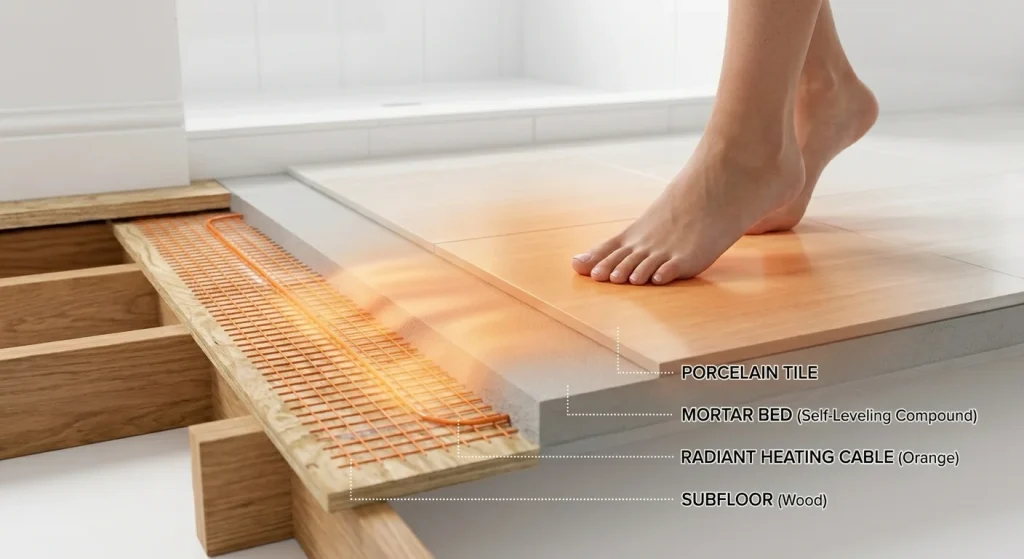
Radiant floor heating works by placing a heat source directly beneath the finished floor surface, warming the floor itself rather than blowing heated air into the room. The floor then radiates warmth upward, reaching your feet first and gradually raising the ambient temperature of the entire room from the ground up. This is fundamentally different from a forced-air HVAC system, which heats the air near the ceiling and lets it slowly settle downward. With radiant heat, the warmth is where you actually stand, making the bathroom feel more comfortable at lower thermostat settings.
The Two Types of Radiant Floor Systems
There are two types of systems used in residential bathrooms, and understanding the difference is the first step toward making a smart decision:
- Electric radiant systems use thin heating cables or mat systems embedded just beneath the tile, connected to the home’s electrical panel and controlled by a programmable thermostat. They heat up within 20 to 30 minutes and pair seamlessly with smart home thermostats.
- Hydronic systems circulate hot water through tubing installed under the floor, connected to a boiler or water heater. They are more efficient for whole-home heating over large square footages but require significantly more infrastructure.
For Sunnyvale bathroom remodels, electric systems are the overwhelming choice. They are thinner, less invasive, faster to install, and perfectly suited for the modest square footage of a typical bathroom. The floor can be warm exactly when you need it, and the system costs nothing to run when the bathroom is empty.
The Sunnyvale-Specific Case for Heated Bathroom Floors
Not every city has the same reasons to install radiant floor heating. Sunnyvale has several that are worth understanding before you decide.
Local Climate and Housing Stock Realities
- Winter nighttime temperatures in Sunnyvale average between 37°F and 45°F, more than cold enough to make tile and stone floors feel sharply uncomfortable underfoot.
- Roughly 39 percent of Sunnyvale homes were built between 1940 and 1969, and many lack the insulation levels found in newer construction.
- Concrete slab foundations, common in mid-century homes, conduct cold directly up through the floor, intensifying the cold-tile experience regardless of what the air temperature reads in the room.
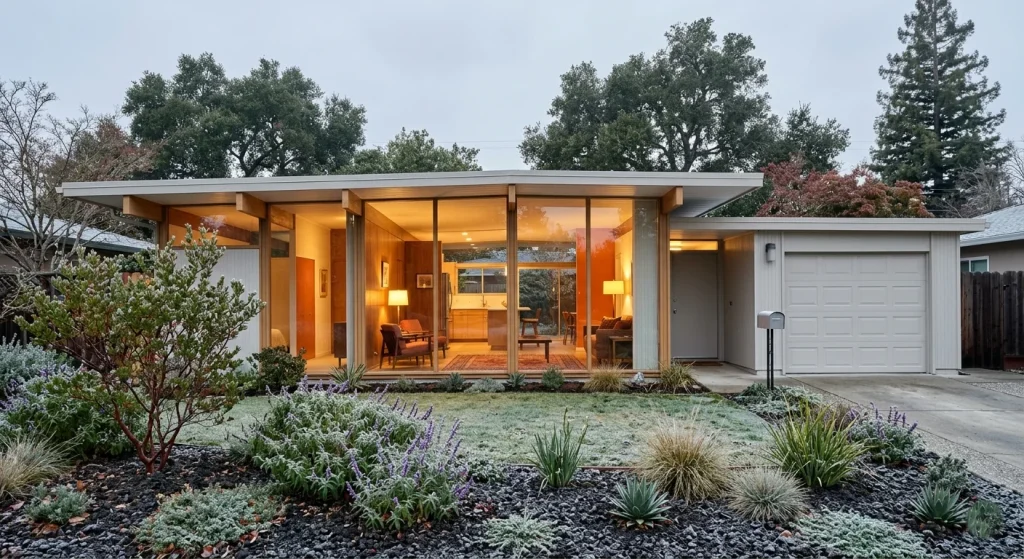
- Sunnyvale’s approximately 1,100 Eichler homes — the iconic post-and-beam houses designed by Joseph Eichler in the 1950s and 1960s — were originally built with radiant heat embedded in the concrete slab. For those whose systems have been decommissioned, adding modern electric radiant heating is a natural restoration of the original design intent.
What the Real Estate Market Adds to the Equation
Buyers in the Bay Area evaluate homes critically. A bathroom remodel that includes radiant floor heating communicates quality, attention to detail, and a genuine investment in the living experience. In a competitive listing environment where small differentiators drive showing traffic and negotiating leverage, that signal is worth more than its installation cost suggests.
Real Costs of Installing Heated Floors in a Sunnyvale Bathroom
Sunnyvale sits in one of the most expensive construction markets in North America. The numbers from national home improvement websites do not reflect local realities, and planning your budget around them is a common and costly mistake.
What Local Labor Actually Costs
- Licensed electricians in Sunnyvale bill at $100 to $150 per hour
- Tile installers charge $65 to $100 per hour
- General contractors charge $75 to $150 per hour or take 15 to 20 percent of the total project cost
These rates run 35 to 50 percent above California state averages and roughly 60 to 80 percent above national benchmarks.
Realistic Budget Breakdown for a Sunnyvale Bathroom
For a typical bathroom ranging from 40 to 100 square feet, here is what an honest budget looks like:
| Cost Component | Estimated Range |
| Electric radiant mat or cable system (materials) | $6 to $16 per sq ft ($240 to $1,600 total) |
| Electrician labor (connection and thermostat) | $200 to $500 |
| Tile installation labor | $65 to $100 per sq ft |
| Total installed add-on cost | $500 to $2,500 |
Why Timing Your Installation Correctly Saves Thousands
The most important cost-reduction strategy for heated floors is bundling the installation with an existing bathroom remodel:
- When the floor is already scheduled for removal, the subfloor is exposed and the tile setter is already on site
- Adding a radiant mat at that point adds less than half a day of work
- The only meaningful incremental cost becomes the heating system materials ($300 to $1,200)
- Installing as a standalone project requires paying for floor removal, system, and full retiling as separate line items — significantly more expensive
Permit Requirements in Sunnyvale
Sunnyvale requires permits for electrical work, and a licensed electrician pulling a permit for thermostat and circuit connections is standard practice. A few additional local factors worth noting:
- Permit costs are modest but add to the timeline
- Homes with raised foundations older than 50 years may require a seismic assessment under updated 2025 California Building Code requirements
- Older Sunnyvale homes sometimes contain asbestos in floor tiles or pipe insulation, and testing ($200 to $500) may be required before floor removal begins
Monthly Operating Costs and Energy Efficiency in the Bay Area
One of the most persistent misconceptions about radiant floor heating is that it is expensive to run. In a bathroom context, where the system operates over a small footprint for a few hours each morning, the operating cost is genuinely low.
What You Actually Pay Each Month
- A 50 to 100 square foot bathroom running four hours per day typically costs $14 to $18 per month at California’s residential electricity rates
- Annual operating costs in Sunnyvale’s mild climate are lower than in colder regions because the heating season is shorter
- The system supplements rather than replaces your primary HVAC, and some homeowners use their central heating less as a result
How Smart Thermostats Eliminate Waste
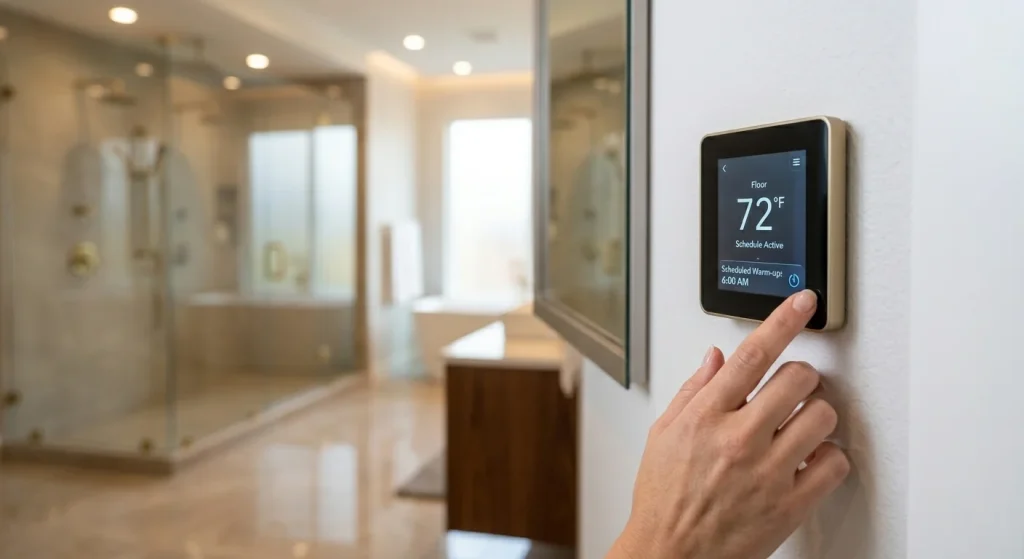
Modern radiant floor heating packages from brands like Schluter, Nuheat, Warmup, and WarmlyYours come with smart thermostats that allow precise scheduling:
- Program the floor to warm up 30 minutes before your morning routine
- Set it to shut off automatically when the bathroom is unoccupied
- Monitor and adjust energy usage through apps connected to Google Home, Amazon Alexa, or Apple HomeKit
- Eliminate the guesswork that leads to unnecessary runtime
Electric vs. Hydronic: Which System Makes Sense for a Sunnyvale Bathroom
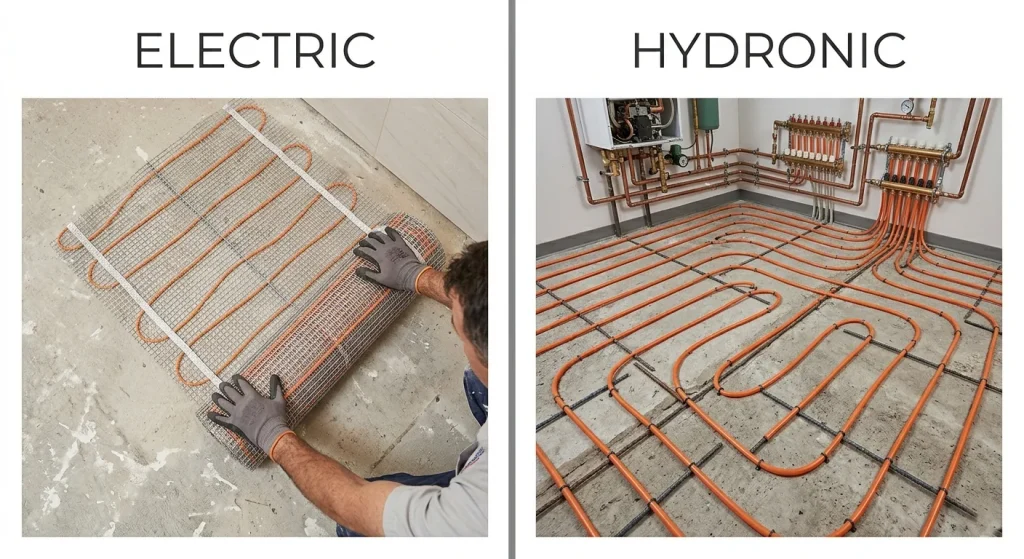
For a standalone bathroom installation in Sunnyvale, electric radiant heating is almost always the right answer.
Why Electric Wins for Bathroom Applications
- Fast heat-up time: Electric systems warm the floor in 30 to 60 minutes; hydronic systems can take several hours
- Thin profile: Electric mats are roughly one-eighth of an inch thick, adding negligible height to the floor and avoiding transition problems between rooms
- No boiler required: Hydronic systems need a boiler, pump, and gas lines — major infrastructure not worth installing for a single bathroom
- 100 percent energy conversion: Electric systems use all their electrical energy to produce heat with no distribution losses
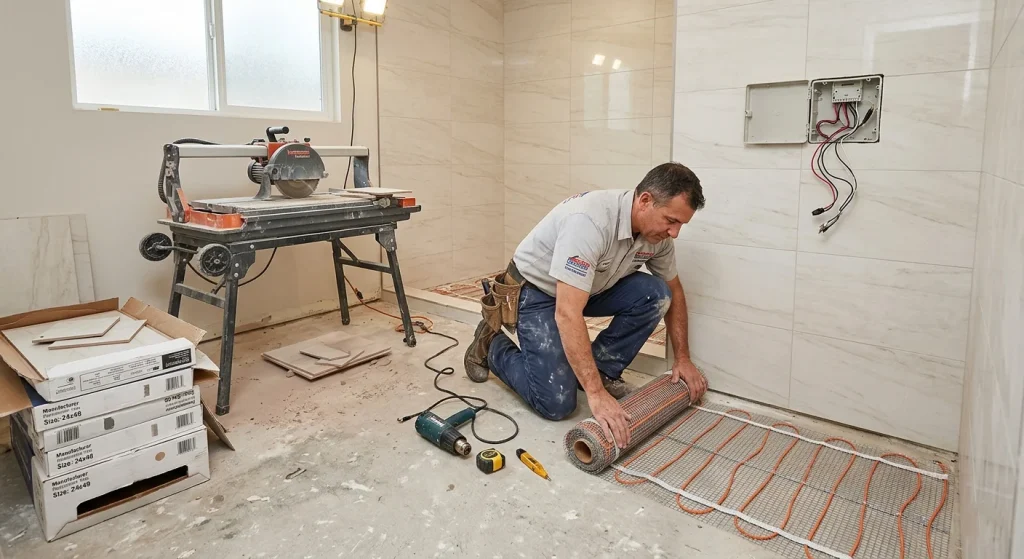
- Easy installation: Electric systems can typically be installed by a licensed electrician in a single day, making them practical for retrofits and remodels
When Hydronic Makes More Sense
Hydronic systems earn their higher installation cost in specific circumstances:
- Whole-home heating over large square footage (typically 2,000 square feet or more)
- New construction where the boiler infrastructure can be built in from the start
- Homes that already have a functioning hydronic boiler system
For the vast majority of Sunnyvale homeowners adding heated floors to one or two bathrooms, electric is the practical, cost-effective, and code-compliant choice.
Best Flooring Materials to Pair with Radiant Heat
Not all flooring conducts radiant heat equally well. The best options for Sunnyvale bathrooms include:
- Porcelain tile — the most popular choice; excellent heat conductor, durable, and water-resistant
- Ceramic tile — similar performance to porcelain at a lower material cost
- Natural stone (travertine, marble, slate) — absorbs heat efficiently and holds warmth after the system cycles off
- Engineered stone — performs similarly to natural stone with more consistent thickness
- Luxury vinyl tile (LVT) — compatible with low-wattage systems and appropriate thermostat controls
Hardwood flooring and thick carpet are generally not recommended because both materials insulate against the heat rather than conducting it upward.
What Heated Floors Do to Sunnyvale Home Values
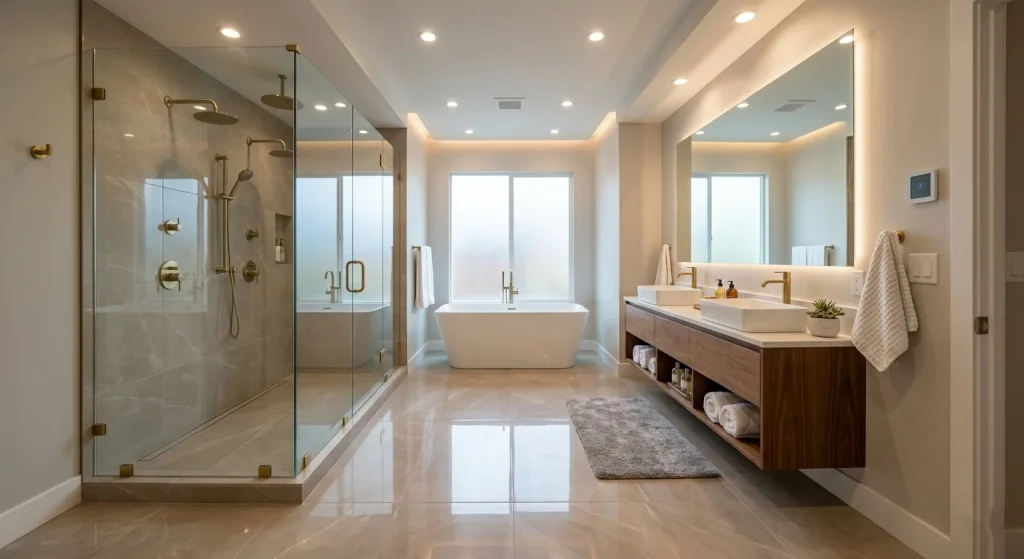
The Bay Area real estate market is one of the most closely analyzed in the country, and premium bathroom features carry measurable weight in listing appeal and negotiation dynamics.
The Numbers Behind the ROI
- Homeowners who install radiant floor heating typically see a 50 to 80 percent return on the cost of the system at the time of sale
- Sunnyvale bathroom remodels overall carry a 60 to 70 percent ROI
- Mid-range full Sunnyvale bathroom remodels run $25,000 to $40,000 — within that budget, adding $500 to $2,500 of radiant heating is a low-cost, high-impact addition
- The phrase “heated floors” in a listing functions as a luxury signal that increases showing requests and buyer interest
Luxury Features That Reinforce Each Other at Resale
Real estate professionals in the Bay Area consistently report that certain bathroom features work together to elevate perceived home quality:
- Radiant floor heating
- Steam showers
- Freestanding soaking tubs
- Frameless glass shower enclosures
- Large-format porcelain tile
Radiant floors anchor the comfort story and tie the other upgrades together in a way buyers notice and remember.
The Daily Value Calculation
For homeowners not planning to sell, the math is even simpler. A feature that costs roughly $15 per month to operate and that makes your morning bathroom experience noticeably better every single day has a payback period measured in comfort, not years. That is where most of the value is actually realized.
How Radiant Floor Heating Affects Bathroom Moisture and Air Quality
A benefit that rarely gets discussed in the context of Bay Area homes is how radiant floor heating affects moisture management and air quality — two issues that matter more in older Sunnyvale housing than in newer construction.
Moisture Reduction and Mold Prevention
- Tile and stone floors that are slightly warm dry faster after showers
- Reduced damp surface area means less opportunity for mold and mildew to establish
- This is particularly relevant in Sunnyvale’s older housing stock, where bathroom ventilation may not meet current standards and moisture intrusion has historically been a maintenance concern
Better Air Quality Without Forced Air
Radiant systems do not move air. That distinction matters:
- No circulation of airborne dust, pet dander, or allergens — unlike forced-air HVAC systems
- Quieter operation with no fan noise during early morning hours
- For households where someone has respiratory sensitivities, a radiant floor system contributes to cleaner bathroom air as a direct consequence of how the system works
The Best Time to Install Heated Floors in a Sunnyvale Bathroom
Timing has a direct impact on both cost and the amount of disruption to your household. Getting this right saves money and frustration.
Install During a Remodel — Not After
The ideal installation window is during an active bathroom remodel when the existing floor is already scheduled for removal:
- The subfloor is exposed and accessible at no additional labor cost
- The tile setter is already on site and familiar with the project
- The electrician can run thermostat wiring while other trades are working in parallel
- Total add-on time is typically less than half a day
- The only meaningful incremental cost is the heating system materials ($300 to $1,200)
Installing as a retrofit — when the existing tile is not already coming up — requires full floor removal, system installation, and complete retiling as separate expenses. Unless the tile is already damaged or overdue for replacement, this approach is rarely cost-effective.
Plan Early to Avoid Sunnyvale’s Contractor Backlog
- Reputable Sunnyvale remodeling firms often carry minimum project thresholds of $20,000 to $25,000 for full bathroom work
- Lead times of four to twelve weeks just to get on a contractor’s schedule are common
- Specifying radiant floor heating at the beginning of your project scope ensures the electrician and tile installer coordinate properly and that the system is ordered in advance
- Adding it as an afterthought late in the project can delay completion or result in the feature being left out entirely
Choosing the Right Contractor and System for a Sunnyvale Installation
Getting the contractor and product selection right matters because the heating cable is embedded beneath the tile and is not accessible without a full floor replacement if something goes wrong.
Licensing Requirements You Cannot Skip
- All electrical work in California must be performed by a C-10 licensed electrician
- The electrician handles the panel connection, dedicated circuit, and thermostat installation
- Tile work must be handled by a licensed tile contractor familiar with embedding thin heating systems in a mortar bed without damaging the cables
- Not all tile setters have radiant experience — ask explicitly about prior radiant floor projects before signing a contract
Trusted Brands Available Through Bay Area Contractors
Several well-regarded brands sell through licensed contractors and electrical supply houses in the Bay Area:
- Schluter Ditra-Heat — popular for its uncoupling membrane that also serves as the heating substrate
- Warmup — strong smart thermostat integration and broad system compatibility
- Nuheat — pre-sized mats that simplify installation in standard bathroom footprints
- WarmlyYours — offers free custom layout planning and a 25-year no-nonsense warranty on heating elements
When evaluating brands, prioritize warranty length on the heating element itself — 25 years is the industry benchmark for a quality system. A warranty matters more here than in most home products because the cable is permanently embedded beneath tile.
Permits and the Resale Implications of Skipping Them
Permits for radiant floor heating electrical work are processed through the City of Sunnyvale’s Building and Safety Division. A licensed contractor manages this process and typically includes the permit cost in the installation quote. The practical reason to insist on permitted work goes beyond code compliance:
- Unpermitted electrical work can create complications during escrow in the California real estate market
- Buyers and their inspectors routinely flag unpermitted work as a negotiating point or a condition of sale
- Permitted work transfers cleanly to new owners with a documented record of professional installation
Heated Floors as Part of a Broader Sunnyvale Bathroom Renovation Strategy
Radiant floor heating works best as one component of a thoughtful renovation rather than an isolated upgrade. The feature is most cost-effective, most impactful, and most appealing to future buyers when it is part of a coherent remodel.
Elements That Work Best Alongside Heated Floors
In Sunnyvale’s mid-century and contemporary homes, the following upgrades pair particularly well with radiant floor heating:
- Large-format porcelain tile — maximizes the heat-conducting surface area and reduces grout lines
- Programmable smart thermostat — essential for efficient scheduling and remote control
- Improved exhaust ventilation — works with the moisture-reduction benefits of warm floors
- Updated recessed or LED lighting — elevates the overall bathroom experience alongside the comfort underfoot
- Frameless glass shower enclosure — complements the spa-like quality that radiant floors establish
Where Heated Floors Fit in a Sunnyvale Renovation Budget
- For full bathroom renovations in the $25,000 to $40,000 range, radiant floor heating represents one of the highest-value additions within the budget
- The cost as a line item is small relative to plumbing, cabinetry, and tile
- The daily visibility and comfort impact are disproportionately high compared to the investment
- In the context of a remodel where the floor is already coming up, skipping radiant heat is often the decision homeowners wish they had made differently when they are writing the check anyway
The Sunnyvale bathroom remodel market rewards investments that combine genuine daily comfort with clear resale appeal. Heated floors sit at exactly that intersection, and among the choices available within a renovation budget where every dollar is scrutinized, few deliver the combination of immediate livability and long-term value as consistently.