If you own a home in Sunnyvale and you are weighing whether to build an attached or detached Accessory Dwelling Unit, here is the short answer:
- Detached ADU makes more sense for rental income, design freedom, and long-term property value.
- Attached ADU is the smarter move for smaller lots, tighter budgets, and multigenerational households.
The right choice depends entirely on your lot size, financial goals, and how you plan to use the space. Read on, and you will have a clear picture of both options as they apply specifically to Sunnyvale’s zoning rules, costs, and housing market.
What Sunnyvale’s ADU Landscape Actually Looks Like Right Now
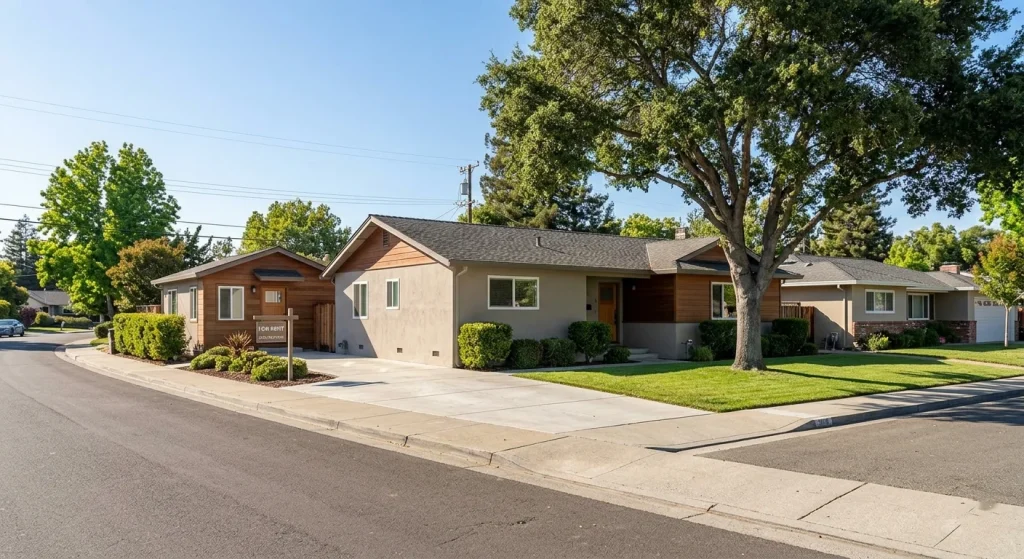
Sunnyvale sits at the center of Silicon Valley, and the pressure on its housing market is unlike almost anywhere else in California. With major employers like Apple, Google, LinkedIn, and Meta nearby, the demand for rental units remains consistently high, which is exactly why so many homeowners here are turning to ADUs as a strategic investment.
Why Sunnyvale Is One of the Most ADU-Friendly Cities in the Bay Area
- The city follows California state ADU law and processes most applications through a ministerial approval pathway, meaning permits are reviewed administratively without public hearings or neighbor objections.
- Most complete applications receive a decision within 60 days.
- Sunnyvale recently updated its rules through Ordinance No. 3240-25, which now allows detached ADUs of up to 800 square feet to be built in the front yard with zero front setback, opening up options for homeowners with limited backyard space.
These policy shifts make this one of the best cities in the entire Bay Area to build an ADU right now.
The Core Difference Between an Attached and Detached ADU
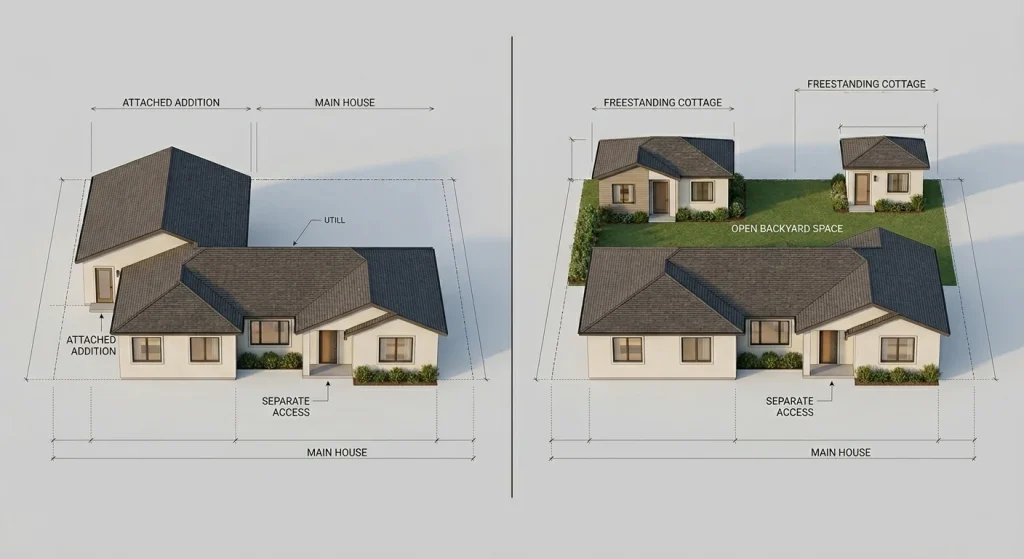
Before diving into which makes more sense, it helps to be clear about what each type actually means under Sunnyvale’s regulations.
Attached ADU
An attached ADU shares at least one wall with the primary residence. Common forms include:
- A ground-floor addition to the rear or side of the main house
- A converted garage that is physically connected to the home
- A second-story addition built above the existing structure
Sunnyvale-specific rules for attached ADUs:
- Maximum height: 25 feet, or the same height as the primary dwelling, whichever is lower
- Minimum size guaranteed by state law: 850 sq ft for a one-bedroom, 1,000 sq ft for a two-bedroom
Detached ADU
A detached ADU is a fully separate, freestanding structure on the same property. It can be placed in:
- The backyard
- A side yard
- The front yard (under 800 sq ft, per Ordinance 3240-25)
Sunnyvale-specific rules for detached ADUs:
- Maximum size: 1,200 square feet
- Standard height limit: 16 feet
- Near VTA light rail corridors: up to 18 feet, enabling two-story designs
Both types share a 4-foot minimum setback from rear and side property lines, and neither requires additional parking under California state law.
Cost Comparison: What You Should Realistically Expect to Spend
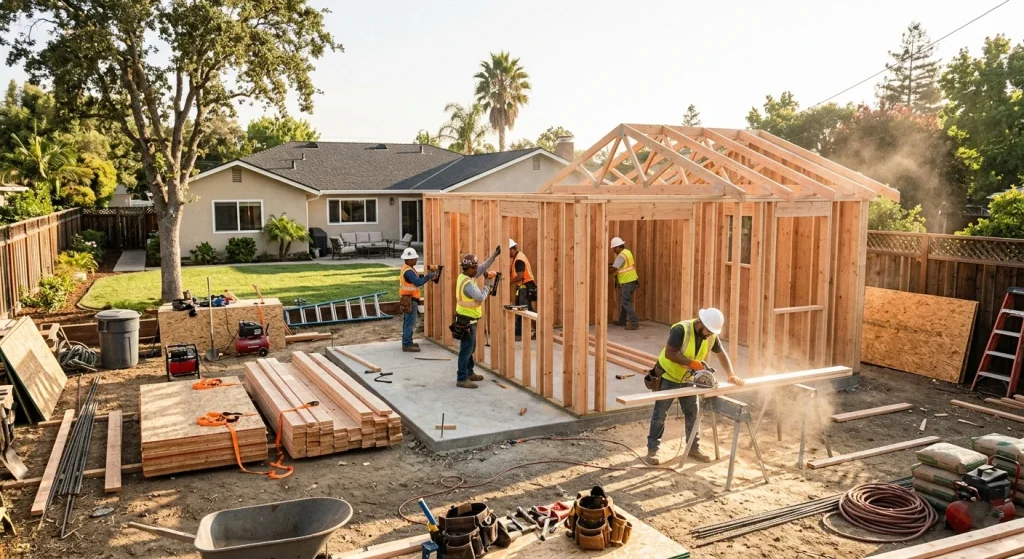
Construction costs for ADUs in Sunnyvale in 2026 generally fall between $250,000 and $500,000 or more, depending on size, design complexity, site conditions, and finish quality.
Attached ADU Costs
- Generally lower upfront cost when converting an existing garage, basement, or room
- Shared walls, existing foundation, and already-connected utilities reduce material and labor
- Less predictable, however: opening walls often reveals hidden structural, plumbing, or electrical issues
- Average build timeline: around 6 months
Detached ADU Costs
- Generally higher baseline cost since everything is built from scratch
- All utility connections, foundation, and systems are installed separately
- More predictable overall: cleaner project scope with fewer surprises
- Average build timeline: around 8 months
The 750 Square Foot Fee Threshold
One cost factor that is easy to overlook: Sunnyvale reduces or completely waives impact fees for ADUs under 750 square feet, in line with state law. If you are comparing a 749-square-foot attached addition to a larger detached unit, the fee savings alone can meaningfully shift your numbers.
Lot Size and the Sunnyvale Reality
Many Sunnyvale homes sit on standard lots of around 6,000 square feet, which is a modest footprint for the Bay Area. This lot of reality matters enormously in the attached versus detached decision.
How Lot Size Affects Each Option
Detached ADU challenges on small lots:
- Requires enough yard space for a freestanding structure plus required setbacks on each side
- On a 6,000 sq ft lot, a detached unit can consume nearly all remaining outdoor space
- Setbacks, utility easements, and tree canopy requirements often reduce the usable footprint further
Attached ADU advantages on small lots:
- Does not require a 6-foot separation gap between structures
- Can extend from the rear, side, or above the garage without eliminating yard space
- Allows homeowners to preserve meaningful outdoor living area
The Front Yard Option
Sunnyvale’s Ordinance 3240-25 has changed the conversation for tight lots. If your backyard is too constrained, a detached unit under 800 square feet placed in the front yard is now a viable option, with no front setback required under the streamlined approval path.
Privacy, Livability, and Who You Plan to House
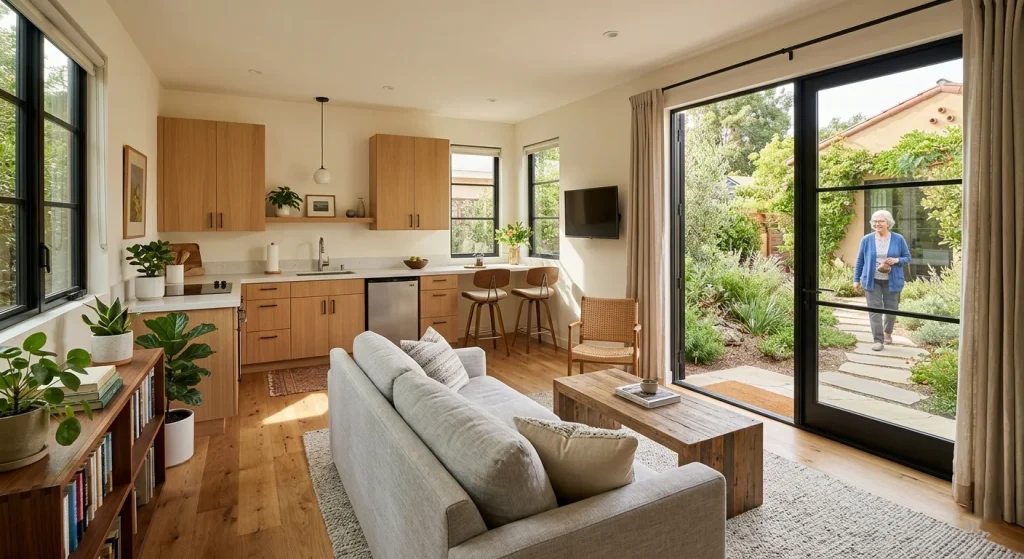
The question of who will live in the ADU shapes the attached versus detached decision more than almost any other factor.
Attached ADU: Better for Family-Centered Use
- Ideal for aging parents, adult children, or in-laws who benefit from physical proximity
- Shared-wall setup makes it easy to check in, respond to health situations, or share meals
- Still provides a separate entrance, kitchen, and bathroom for genuine independence
- The physical closeness that feels limiting for a rental becomes a feature for multigenerational living
Detached ADU: Better for Rental Tenants
- Long-term renters strongly prefer no shared walls and a completely separate entrance
- A detached unit feels like its own home rather than an extension of someone else’s house
- Higher tenant demand directly translates to higher achievable rents
- In Sunnyvale’s Silicon Valley rental market, a well-designed detached ADU can command $2,500 to $4,500 per month
The Noise Factor
Even with quality insulation and soundproofing, an attached ADU carries some acoustic connection to the primary home. Dishwashers, footsteps, late-night television, and early-morning showers will carry through the shared structure to some degree. A detached unit eliminates this entirely, which matters both for tenant satisfaction and everyday livability.
Property Value and Long-Term Return on Investment
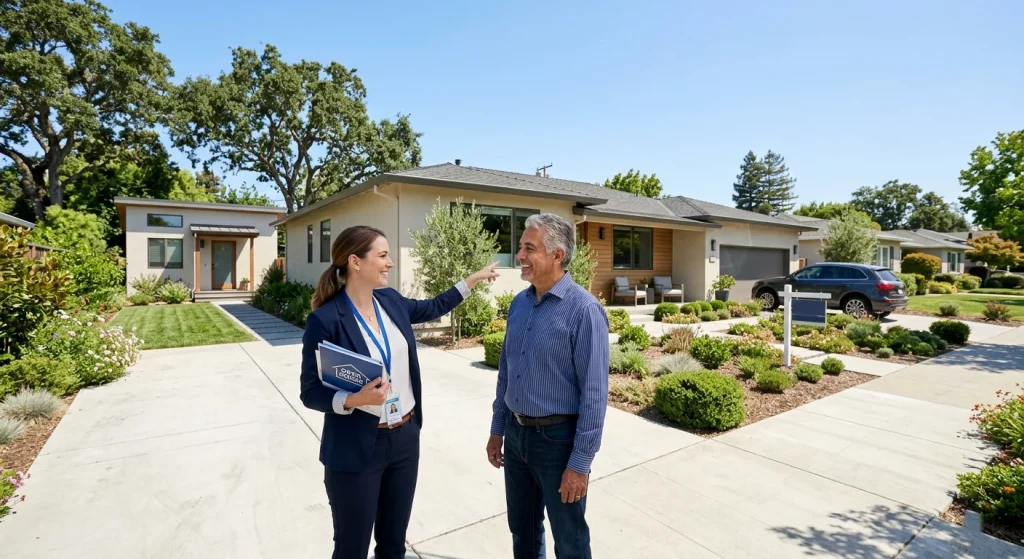
Both ADU types increase property value in Sunnyvale, but the magnitude differs.
What the Research Shows
- Homes with ADUs in California’s competitive markets tend to sell for 20 to 35 percent more than comparable homes without them
- The Terner Center for Housing Innovation at UC Berkeley notes that ADUs increase buyer interest and marketability, though resale price does not always rise dollar-for-dollar with build cost
Detached ADU Value Impact
- Produces the largest absolute property value increase
- Appeals to investors, multigenerational families, and owner-occupants who value rental income potential
- A unit generating reliable monthly rent functions as a partial mortgage offset, a compelling selling point for future buyers
Attached ADU Value Impact
- Produces a smaller but still meaningful property value increase
- Garage conversions and basement conversions tend to deliver strong ROI relative to their lower construction cost
- Efficient value-add option when total budget is a constraint
The Permitting Process in Sunnyvale for Each Type
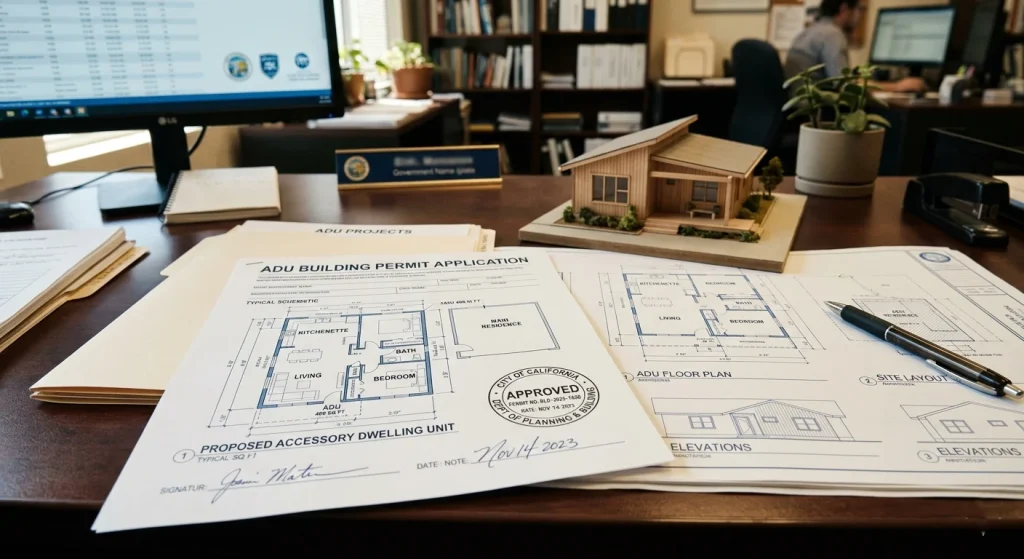
Sunnyvale uses a ministerial pathway for most conforming ADU applications, applying objective standards without a public hearing or neighbor input. This is true for both types.
Attached ADU Permitting
- Interior conversions within the existing footprint often qualify for the most streamlined approval path
- Fewer objective standards triggered around setbacks, height, and lot coverage
- Generally faster to move through the review queue
Detached ADU Permitting
- Requires a more comprehensive plan set since it involves new construction from the ground up
- Review timeline for a complete, code-compliant application: 6 to 12 weeks
- Corrections or additional plan checks can extend that window
- Units under 800 square feet may qualify for over-the-counter approval, reducing wait times significantly
Working with a contractor or design firm experienced in Sunnyvale’s ADU process is one of the most reliable ways to avoid delays regardless of which type you choose.
When an Attached ADU Is the Right Choice for Your Sunnyvale Property
An attached ADU tends to make more sense when several of the following apply to your situation:
- Your lot is 6,000 square feet or smaller and you want to preserve outdoor space
- You have an existing garage, basement, or ground-floor room that can be converted without full new construction
- Your household includes aging parents, in-laws, or adult children who benefit from proximity
- You are working with a tighter budget and need to reduce financial exposure during the build
- You want a shorter construction timeline to minimize disruption
When a Detached ADU Is the Right Choice for Your Sunnyvale Property
A detached ADU tends to make more sense when several of the following apply to your situation:
- Your primary goal is rental income from Sunnyvale’s robust tenant market
- Your lot has enough backyard or front yard depth to accommodate a standalone structure
- You want complete design flexibility, including a custom layout and architectural character
- Long-term property value appreciation and resale appeal are your core metrics
- You want full acoustic and visual separation between the main house and the ADU
- You are building for long-term tenants who expect a truly independent living space
Key Sunnyvale ADU Numbers to Keep in Mind
Understanding the specific figures that govern Sunnyvale ADU development helps you evaluate feasibility before committing to a design direction.
| Regulation | Attached ADU | Detached ADU |
| Maximum size | 850 sq ft (1BR) / 1,000 sq ft (2BR) minimum guaranteed | Up to 1,200 sq ft |
| Height limit | Up to 25 ft (or primary dwelling height) | 16 ft standard, 18 ft near VTA transit |
| Setbacks | Per primary dwelling standards | 4 ft rear and side |
| Parking required | No | No |
| Impact fees waived | Under 750 sq ft | Under 750 sq ft |
| Permit timeline | Often faster for conversions | 6 to 12 weeks typically |
Additional rules that apply to both types:
- Ministerial review: no public hearing required
- 60-day approval target for complete applications
- Owner-occupancy permanently prohibited as a requirement under AB 976
- Short-term rental eligibility subject to Sunnyvale’s current local ordinance
How to Make the Final Decision
The cleanest way to frame the attached versus detached decision in Sunnyvale is to answer three questions honestly:
- What is the primary use case? Rental income, multigenerational housing, or flexible personal space?
- What does your lot actually allow? After accounting for setbacks, existing structures, easements, and tree canopy?
- What is your realistic budget? And how does the cost difference between types affect your return on investment timeline?
If rental income tops your priority list and your lot can accommodate a freestanding structure, the detached ADU is almost certainly the stronger financial decision over a ten-year horizon. If you are working with a smaller lot, a tighter budget, or a family-driven use case, the attached ADU is not a compromise. It is a well-suited solution for exactly those circumstances.
Sunnyvale’s ADU-friendly policies, streamlined permitting, and strong rental market make both options genuinely worthwhile investments. The key is matching the type to your specific property and goals rather than defaulting to one because it sounds more impressive on paper.