
Adding a second bathroom to a Sunnyvale home involves a multi-step process: selecting the right location near existing plumbing, pulling building and plumbing permits from the City of Sunnyvale’s Building Division, hiring licensed contractors for structural, plumbing, and electrical work, and budgeting between $85,000 and $155,000 for a full bathroom addition in the Bay Area. Done correctly, it is one of the smartest investments a Silicon Valley homeowner can make, raising property value by 10 to 20 percent while dramatically improving daily livability.
Why Sunnyvale Homeowners Are Adding Second Bathrooms Now
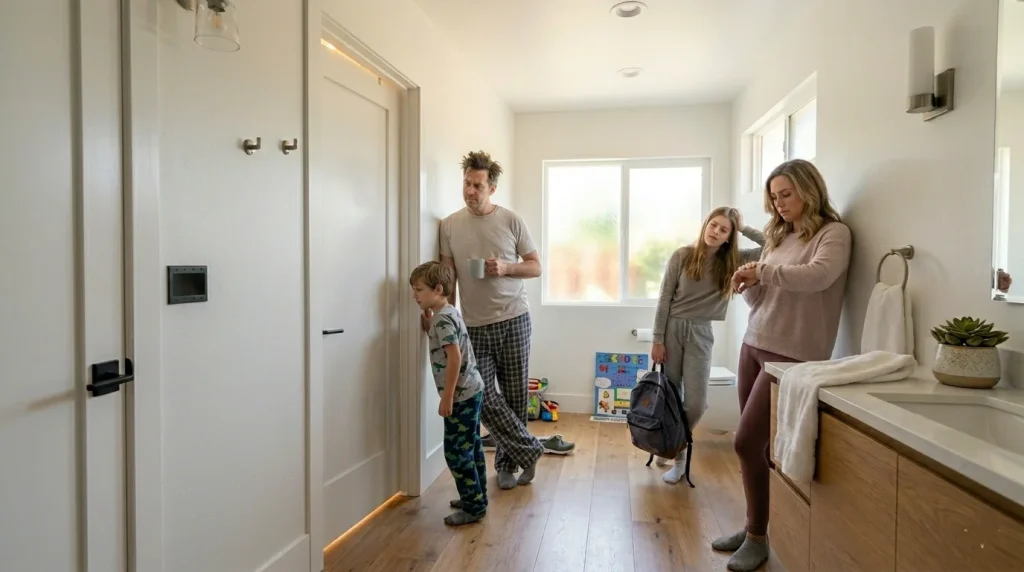
Sunnyvale sits at the heart of Silicon Valley, where tech-driven demand keeps housing values high and buyers expect modern, functional layouts. A one-bathroom home in this market is increasingly at a competitive disadvantage. Multi-generational households, remote work arrangements, and the general pace of life in the South Bay have made a second bathroom less of a luxury and more of a baseline expectation.
The Daily Reality of a Single-Bathroom Home
If your home currently has a single bathroom shared by the whole family, you already know the morning bottleneck. What you may not realize is that solving it through a bathroom addition is one of the few renovation projects in the Bay Area that delivers measurable financial return alongside a genuine quality-of-life improvement. Buyers looking in zip codes like 94086, 94087, and 94089 routinely filter for homes with at least two bathrooms, and listings with that configuration move faster and closer to asking price.
The timing in 2026 also matters. Sunnyvale’s Building Division now processes residential bathroom remodel and addition permits under the 2025 California Building Code, 2025 California Plumbing Code, and 2025 California Energy Efficiency Standards. Understanding these requirements upfront keeps your project on schedule and prevents costly surprises mid-construction.
Key Reasons Sunnyvale Homeowners Are Making the Move
- Rising buyer expectations in the South Bay mean single-bathroom homes sit longer on the market and attract fewer competitive offers
- Multi-generational living has become more common in Silicon Valley, creating real daily pressure on a single shared bathroom
- Remote work has put more people home during peak morning hours, making bathroom access a genuine scheduling problem
- Home values in Sunnyvale make a bathroom addition one of the few renovations that can recover a significant portion of its cost at resale
- Avoiding relocation costs by upgrading in place rather than buying a larger home at today’s mortgage rates
What It Actually Costs to Add a Second Bathroom in Sunnyvale
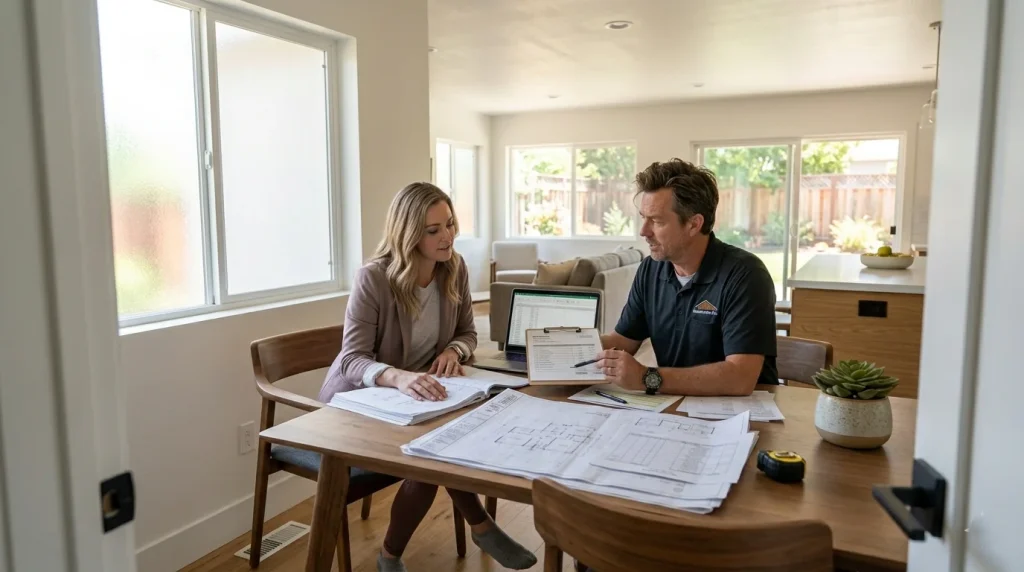
Cost is the first question every homeowner asks, and the honest answer is that Sunnyvale sits in the upper tier of the California market. Bay Area labor rates, seismic requirements, and premium material expectations all push numbers higher than national averages.
Bathroom Addition Cost Ranges in the Bay Area
For a mid-range full bathroom addition of roughly 100 square feet, Bay Area homeowners should plan for $85,000 to $100,000 if the new bathroom ties into existing plumbing. Upscale finishes, more complex layouts, or the need to run new supply and drain lines across the house push that figure to $135,000 to $155,000. Home addition contractors in Sunnyvale generally charge $65 to $130 per hour for labor, and the broader per-square-foot range for home additions in the city runs $275 to $475 for ground-floor work.
| Project Type | Estimated Cost Range |
| Mid-range full bathroom addition (near existing plumbing) | $85,000 to $100,000 |
| Upscale full bathroom addition | $135,000 to $155,000 |
| Ground-floor home addition per square foot | $275 to $475 |
| Second-story addition per square foot | $350 to $475 |
| Plumbing rough and finish (bathroom) | ~$12,300 |
| Electrical rough and finish | ~$7,550 |
| Permit fees (plumbing) | $55 to $660 |
What Drives the Cost Up
- Distance from existing plumbing is the single biggest variable. Every additional foot of pipe run between the new bathroom and the main plumbing stack adds labor and material cost
- Seismic compliance in Santa Clara County adds engineering and structural review requirements that do not apply in most other states
- Labor rates in the Bay Area are significantly above the national average, with contractors charging $65 to $130 per hour
- Permit complexity for projects involving structural changes, new plumbing, and electrical work requires multiple simultaneous permits
- Fixture and finish tier can swing costs dramatically even within the same square footage
How to Keep Costs Under Control
One practical way to control costs is to plan the addition at the same time as another project. Combining a bathroom addition with a bedroom expansion or kitchen update saves 10 to 15 percent compared to running them as separate projects, because mobilization costs, permit coordination, and project management overlap rather than duplicate.
- Place the new bathroom adjacent to an existing wet wall whenever possible
- Choose mid-range fixtures that photograph and appraise well without pushing into luxury territory
- Bundle the bathroom addition with other planned renovations to share contractor mobilization costs
- Get a minimum of three bids from licensed general contractors with verified Sunnyvale experience
- Lock in pricing during the design phase before construction begins
Choosing the Right Location for Your New Bathroom
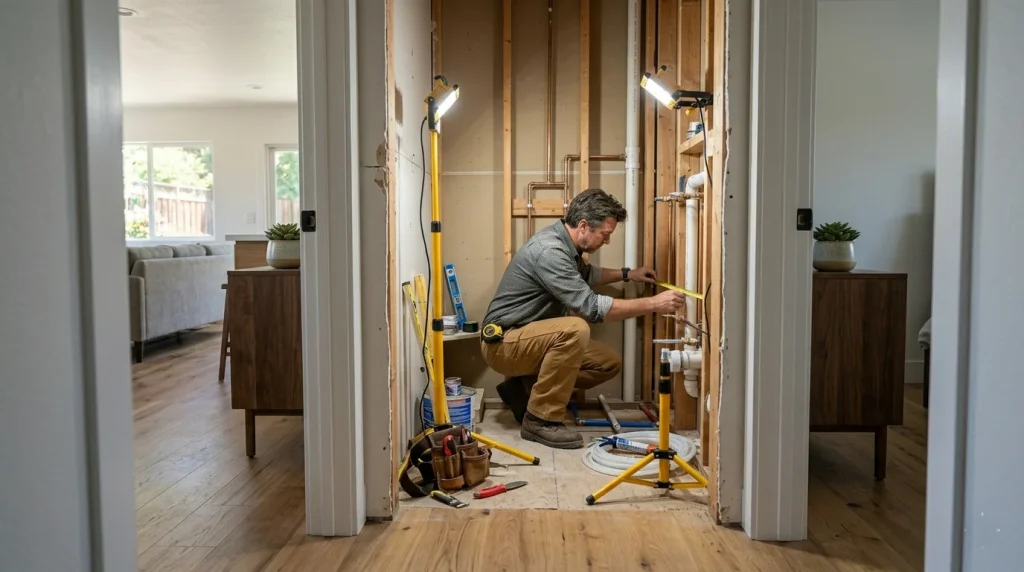
Location is the single most consequential decision in a bathroom addition project, and it is where most homeowners benefit most from professional advice before anything else.
The Plumbing Proximity Rule
Placing a new bathroom within 10 to 15 feet of an existing wet wall keeps plumbing runs short, labor hours down, and the project manageable. Moving fixtures to the opposite side of the house can add thousands of dollars in labor just for pipe routing. The first design conversation should always begin with where the home’s existing plumbing stack is located, then work outward from there.
Best Locations for a Second Bathroom in a Sunnyvale Home
Oversized Hallway Closet
An oversized hallway closet is one of the most cost-effective conversions available. If a closet shares a wall with an existing bathroom, kitchen, or laundry room, the drain line and supply lines are often only inches away.
- A pocket door solves the swing-space problem in tight quarters
- Wall-mount fixtures make a small square footage feel intentional rather than cramped
- This is typically the fastest conversion to permit and build
Under-Stair Space
Understairs space is another option many older Sunnyvale homes offer, particularly ranch-style homes from the 1960s and 1970s. The irregular ceiling height is manageable with proper planning, and the location often puts the new bathroom close to main living areas where a guest powder room is most useful.
Garage Conversion
A garage conversion or partial garage conversion creates a more comfortable footprint if you want a full bathroom rather than a half bath. Sunnyvale’s relatively generous lot sizes and the prevalence of attached two-car garages make this an option worth exploring with a licensed designer.
Master Suite Addition
Master suite additions represent the highest-impact configuration. Adding a dedicated en suite bathroom to the primary bedroom creates what buyers in the Santa Clara County market consistently prioritize. This type of project tends to deliver the strongest return when the home already has a separate guest bathroom on a different floor or wing.
Location Comparison at a Glance
- Hallway closet conversion — lowest cost, fastest timeline, best suited for a half bath
- Understairs conversion — moderate cost, ideal for guest powder rooms near living areas
- Garage conversion — more square footage, suitable for a full bath, may affect parking utility
- Master suite addition — highest cost, highest ROI, strongest buyer appeal in Santa Clara County
Understanding Sunnyvale’s Permit Requirements for Bathroom Additions
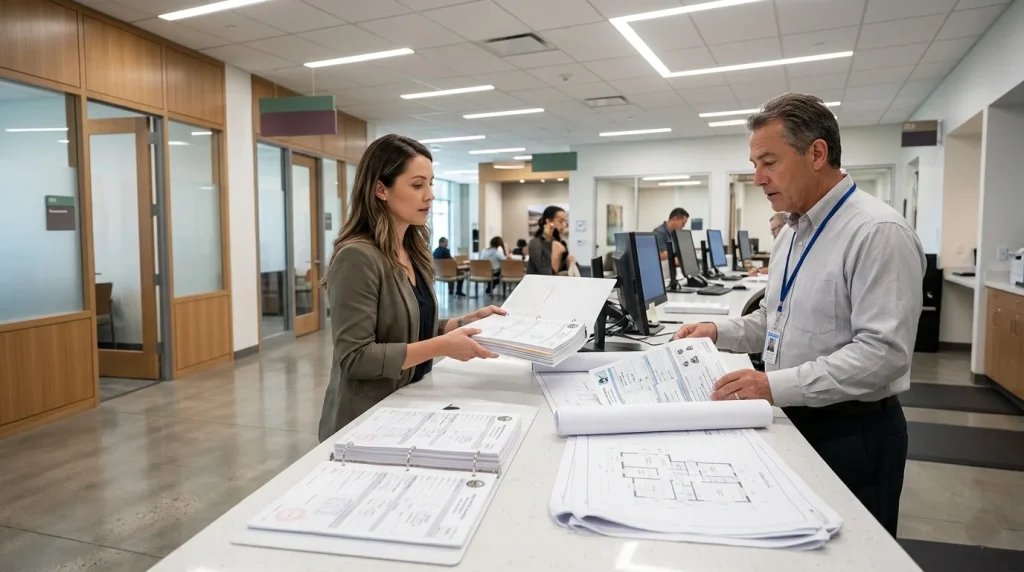
Permits are not bureaucratic formalities in Sunnyvale. They are the mechanism by which the city ensures that plumbing meets the California Plumbing Code’s drain slope requirements, that electrical outlets are on a dedicated GFIC circuit, that ventilation is adequate, and that structural work complies with seismic standards applicable to this part of Santa Clara County.
Which Permits You Will Need
The City of Sunnyvale’s Building Division, located at 456 West Olive Avenue, requires a building permit for any bathroom remodel or addition. A full bathroom remodel is triggered when two or more plumbing fixtures or trade systems are being updated.
- Building permit — required when adding or relocating walls, or when a wall or ceiling finish is removed down to studs and joists
- Plumbing permit — required when adding, replacing, relocating, or reinstalling any plumbing fixture
- Electrical permit — required when adding a circuit, relocating switches, lights, or outlets; bathroom outlets must be on a dedicated GFIC circuit
- Tub and shower permit — required specifically for the replacement or installation of a tub or shower, or the relocation of plumbing fixtures
What Triggers a Full Permit Review
A full bathroom remodel permit is triggered when two or more of the following items are being updated:
- Remodeling or replacing the tub and shower
- Replacing the vanity and sink
- Moving outlets or performing electrical work
- Moving a toilet
- Installing an exhaust fan
- Installing or changing out a window
Ceiling Height Requirements Under the 2025 California Building Code
- Bathrooms must have a ceiling height of not less than 6 feet 8 inches across the required floor area
- For rooms with sloped ceilings, at least 50 percent of the required floor area must have a ceiling height of 7 feet or more
- The ceiling height above fixtures must allow normal use without obstruction
What Happens During Plumbing Inspection
Sunnyvale’s Building Division typically processes plan reviews for residential additions in 3 to 6 weeks. Plumbing inspections are staged, and an inspector must see all piping before walls, ceilings, or floors are closed.
During the rough-in inspection, the inspector checks for:
- Drain slope at one quarter inch per foot for pipes under three inches in diameter
- Vent routing distances and compliance with IRC Table P3105.1
- Cleanout placement and pipe support
- Supply lines pressure-tested at 50 PSI minimum for 15 minutes
- DWV system water-tested by filling to 10 feet above the highest fitting and holding for 15 minutes
Starting work before permits are issued doubles the permit fee under Sunnyvale’s plumbing code and triggers a formal investigation process that can delay your project significantly and complicate resale.
The Step-by-Step Process of Adding a Second Bathroom
Understanding the sequence of a bathroom addition project reduces stress and prevents the kind of mistakes that cause cost overruns.
Phase 1: Design and Site Assessment
The project begins with a design and layout phase. An architect or experienced design-build contractor evaluates:
- Existing plumbing stack locations and wet wall positions
- Structural load-bearing walls that cannot be removed or altered without engineering review
- Lot coverage limits and setback requirements under Sunnyvale’s zoning code
- Seismic considerations, since Sunnyvale is in a seismically active region
- Available square footage and ceiling height in candidate locations
A thorough Phase 1 design process produces drawings detailed enough to submit for permit review and precise enough to generate reliable construction bids.
Phase 2: Permit Submission and Approval
Once the design is finalized, the permit application package is submitted to Sunnyvale’s Building Division. Typical plan review takes 3 to 6 weeks. During this phase:
- No construction work may begin
- The contractor and homeowner finalize material selections and fixture specifications
- Subcontractors for plumbing, electrical, and tile are confirmed and scheduled
- Any structural engineering required for seismic compliance is completed
Phase 3: Rough-In Construction
After permits are issued, the contractor prepares the site and begins rough-in work:
- Walls are opened to access existing plumbing
- New supply lines and drain-waste-vent lines are run to fixture locations
- Electrical circuits are laid out and wiring is run
- Exhaust ventilation ductwork is installed
- Framing for any new walls or bump-out addition is completed
Phase 4: Rough-In Inspection
The rough-in inspection must pass before walls are closed. This is not a disruption to schedule; it is a built-in quality checkpoint that confirms the plumbing and electrical work meets code before it becomes inaccessible behind finished surfaces.
Phase 5: Finish Work and Final Inspection
After the rough-in inspection passes:
- Walls are closed with moisture-resistant drywall
- Waterproofing membranes are applied in shower and tub areas
- Tile work or wall panels are installed
- Finish plumbing begins with fixture setting and trim installation
- Lighting, mirrors, exhaust fans, and accessories are mounted
- Final inspection is scheduled through the Building Division
A typical bathroom addition in Sunnyvale runs 3 to 6 months from permit submission through final inspection, depending on scope and complexity.
Half Bath Versus Full Bath Addition in Sunnyvale
The choice between a half bath and a full bathroom affects both budget and return on investment differently. The right answer depends on your home’s current configuration and your primary goal.
Half Bath (Powder Room)
A half bath contains a toilet and sink only. It is most valuable when added near main living areas, guest bedrooms, or entertainment zones.
- Best for: Homes with one full bathroom upstairs and a need for guest access on the main level
- Typical footprint: 15 to 25 square feet
- Cost advantage: Requires less floor area, less plumbing complexity, and significantly less budget
- ROI estimate: Half baths carry an estimated ROI of around 60 percent
- Buyer appeal: Strong when placed near main living areas; less effective if tucked in an inconvenient location
Full Bathroom
A full bathroom includes a shower or tub in addition to the toilet and sink. It is a stronger investment when the goal is to address a genuine capacity problem.
- Best for: Homes with three or more bedrooms sharing a single full bathroom
- Typical footprint: 40 to 70 square feet for a comfortable layout
- Cost range: $85,000 to $155,000 in the Bay Area depending on placement and finishes
- ROI estimate: A mid-range full bathroom addition returns approximately 66 percent of its cost at resale
- Buyer appeal: Highest in the Santa Clara County market, particularly for family buyers and multi-generational households
Which One Makes More Sense for Your Sunnyvale Home
- If the home has one full bathroom and multiple bedrooms, a second full bathroom is the stronger investment
- If the home has a full bathroom upstairs and needs guest access on the main level, a half bath delivers strong ROI at lower cost
- If budget is constrained, a half bath is a defensible choice that still improves livability and buyer appeal meaningfully
Fixtures, Finishes, and Materials That Maximize Value in Silicon Valley
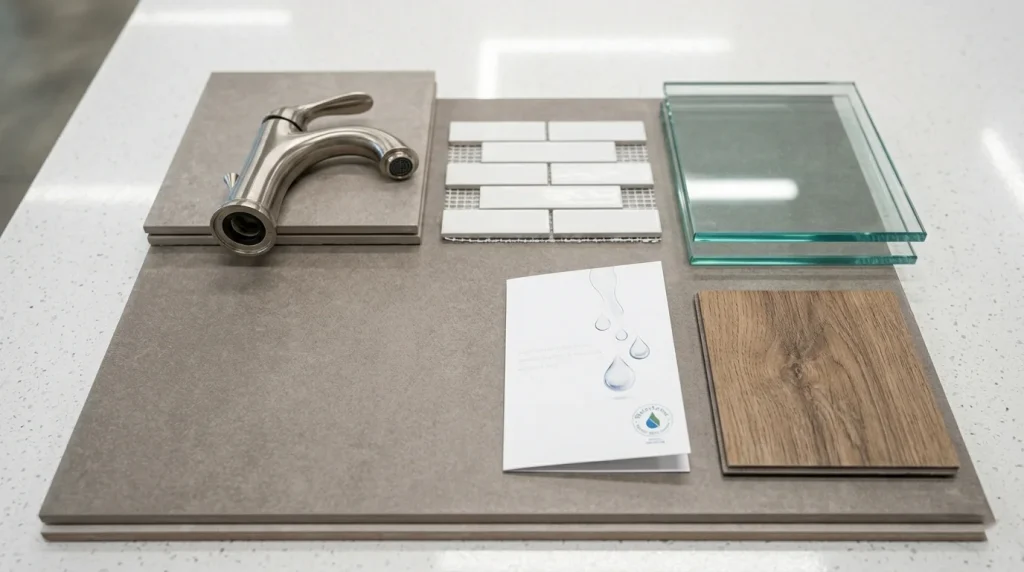
Buyers in Sunnyvale have seen enough renovated homes to recognize quality, and they can tell the difference between a bathroom built for resale and one that was built thoughtfully. Selecting materials at the right tier matters both aesthetically and financially.
Flooring
- Porcelain tile in large format sizes reads as premium and is genuinely durable in wet environments; the most reliable choice for resale
- Luxury vinyl plank offers water resistance at a lower price point and is faster to install without sacrificing appearance
- Natural stone delivers a high-end look but adds cost and requires more maintenance, best reserved for upscale projects
Shower Enclosures
Shower enclosures drive more perceived value than almost any other element in the bathroom.
- Frameless glass door with tiled surround consistently outperforms prefabricated fiberglass units in appraisals and buyer perception
- Semi-frameless door with subway tile or large-format tile is a strong middle-ground choice when budget is tighter
- Prefabricated fiberglass units are functional but reduce perceived quality in a market where buyers have elevated expectations
Vanity and Toilet
- A floating vanity with under-cabinet lighting signals a contemporary, design-forward renovation that aligns with Silicon Valley buyer aesthetics
- A wall-mount toilet saves floor space in compact bathrooms and reads as modern in the Bay Area market
- Dual-flush or WaterSense-certified toilets meet California conservation standards and resonate with environmentally conscious buyers
Water Efficiency Fixtures
California’s water conservation standards make efficiency a practical and regulatory priority, not just a marketing preference.
- WaterSense-certified toilets use 20 percent less water than standard models
- Low-flow showerheads that comply with CalGreen standards are required in new installations
- Touchless or sensor faucets are an increasingly common choice in Bay Area remodels
How a Second Bathroom Affects Property Value and Resale in Sunnyvale
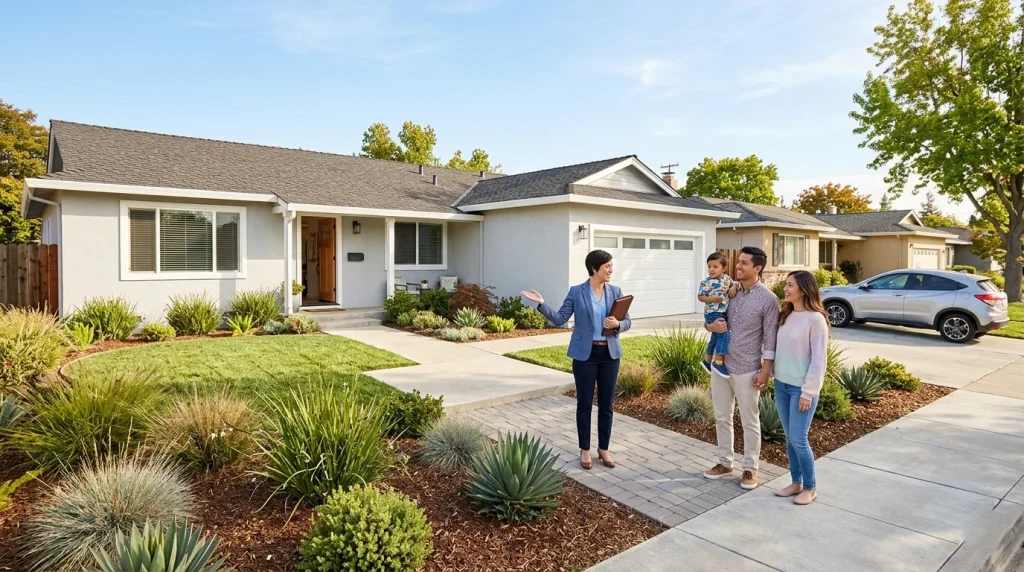
Santa Clara County’s real estate market is one of the most data-driven in the country. Buyers, agents, and appraisers pay close attention to bathroom counts because they are a leading indicator of how well a home functions for its size.
The Financial Impact of Going from One Bathroom to Two
Adding a second bathroom to a home that currently has only one is widely considered the highest-ROI bathroom project available because it removes a structural objection from a buyer’s evaluation.
- A mid-range bathroom addition adds roughly $28,000 in appraised market value
- An upscale bathroom addition contributes approximately $51,000 in market value
- In Sunnyvale, where median home values run well above California averages, these figures may skew higher
- A well-executed bathroom addition increases home value by 10 to 30 percent in most markets
- Homes with two or more bathrooms sell faster and attract a significantly larger pool of serious buyers
Why Buyer Psychology Matters
Many growing families, couples with different schedules, and multi-generational households will not seriously consider a home that cannot accommodate basic morning routines without conflict. A second bathroom lifts that ceiling and expands the pool of serious buyers. A one-bathroom home in Sunnyvale limits buyer interest in ways that show up directly in days-on-market and final sale price.
The Over-Improvement Warning
One important planning principle is to avoid improving beyond neighborhood norms. Adding a bathroom with luxury spa finishes to a modest starter home in a neighborhood where comparables are mid-range renovations rarely produces a proportional return. The better strategy is to match the quality tier of the surrounding market and focus on solving the functional gap a second bathroom addresses.
Working with Contractors in Sunnyvale on a Bathroom Addition
The Bay Area contractor market is competitive, and the variance in quality and pricing is meaningful. Getting multiple bids is standard practice, but price alone should not drive the decision on a project of this scope.
What to Look for in a Sunnyvale Contractor
- Active California Contractors State License Board (CSLB) license — verify before signing any agreement
- Documented experience with Sunnyvale’s Building Division — familiarity with the permit submission process and inspection scheduling prevents costly delays
- Established subcontractor relationships in the local market for plumbing, electrical, and tile work
- A clear process for unforeseen conditions — old galvanized pipes, outdated electrical panels, and unexpected structural elements are common in older Sunnyvale homes
- A design-build model or strong design partnership to reduce communication gaps between the planning and construction phases
Questions to Ask Before Hiring
- How many bathroom additions have you completed specifically in Sunnyvale in the last two years?
- How do you handle permit submission and inspection scheduling with the City’s Building Division?
- What is your process when you open walls and find something unexpected?
- Can you provide references from recent bathroom addition projects in Santa Clara County?
- Is your bid fixed-price or subject to change orders, and under what conditions?
Design-Build vs. General Contractor
A design-build firm simplifies the coordination between design, permitting, and construction by managing the entire project under one contract. This structure reduces the communication gaps that often cause delays when a homeowner is managing an architect, a general contractor, and subcontractors separately. For a project of this complexity in Sunnyvale’s permitting environment, the design-build model often produces fewer surprises and a more predictable timeline.
Common Mistakes to Avoid When Adding a Second Bathroom
Most of the expensive problems in bathroom addition projects trace back to a handful of avoidable decisions.
Placing the Bathroom Too Far from Existing Plumbing
Every additional foot of pipe run adds labor and material cost. A bathroom addition positioned on the opposite side of the house from the only existing plumbing stack is technically achievable but financially painful and sometimes structurally complicated. The first design conversation should always start with where the plumbing is and work outward from there.
Starting Work Before Permits Are Issued
Sunnyvale’s building code doubles the permit fee for work commenced without authorization. Beyond the fee, unpermitted additions can:
- Trigger code enforcement proceedings that halt the project
- Complicate refinancing when lenders require a clear permit history
- Create disclosure liability when selling the home
- Show up in a buyer’s home inspection and derail a transaction
Skipping Proper Ventilation
A bathroom without proper exhaust ventilation accumulates moisture that eventually damages drywall, promotes mold growth, and degrades tile grout. California’s 2025 building code requires exhaust ventilation in bathrooms. Cutting corners here creates problems that surface years after construction and are expensive to remediate.
Under-Sizing the Space
- The minimum viable full bathroom footprint is roughly 40 to 45 square feet
- A 60 to 70 square foot bathroom produces a noticeably more comfortable experience
- A bathroom that is too small for comfortable use does not deliver the livability benefit the project was intended to create, and it reads poorly during a home showing
Choosing Fixtures Before Finalizing the Layout
Selecting fixtures before the layout and plumbing rough-in are finalized creates expensive change orders. Fixture dimensions, drain locations, and clearance requirements all influence the framing and plumbing plan. The sequence should always be layout first, fixtures second.
The Long-Term Case for a Second Bathroom in Sunnyvale
Sunnyvale homeowners who add a second bathroom consistently report two things: the immediate improvement in daily household function, and the peace of mind that comes from knowing the investment is structurally sound, properly permitted, and aligned with what the local market rewards.
Sunnyvale’s Housing Stock and the Opportunity It Presents
Silicon Valley’s housing stock includes a large share of older single-story homes built in the 1950s through 1970s with one or occasionally one-and-a-half bathrooms. These homes sit in desirable school districts, established neighborhoods, and convenient commute corridors. A bathroom addition is often the most cost-effective way to bring a home’s functionality up to contemporary expectations without:
- Moving and absorbing a higher mortgage rate on a new purchase
- Losing the neighborhood equity and school district access built over years
- Competing in Sunnyvale’s tight resale inventory as a buyer
What Makes a Bathroom Addition Defensible as an Investment
If the project is planned carefully, sited near existing plumbing, permitted correctly, and built with finishes that align with the Sunnyvale market, a second bathroom is one of the most defensible investments available to a homeowner in this part of the Bay Area.
The combination of strong local demand, above-average home values, and an undersupply of two-bathroom homes in older Sunnyvale neighborhoods means the conditions that make this investment compelling are structural, not temporary. A properly executed bathroom addition here is not just a renovation. It is a repositioning of your home in one of the most competitive real estate markets in the country.